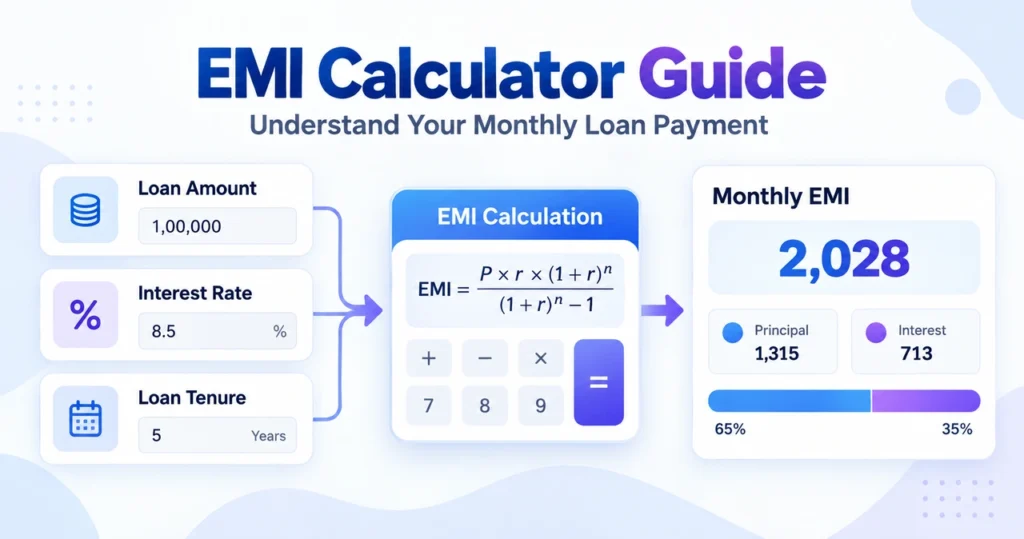
Why an identical payment is mostly interest at first
The EMI Calculator produces a payment that clears both interest and capital in equal instalments across the whole term, but the composition of that fixed payment shifts as the loan progresses: early instalments are mostly interest because the outstanding balance is at its largest then, and later ones are mostly capital because the balance has shrunk. The amount paid each month never changes, which is exactly why that shift is invisible unless a full schedule is actually examined.
A longer term always lowers the instalment and raises the total
Stretching the term out means the balance stays outstanding for longer, so more interest accrues over the life of the loan even as the monthly figure drops. The most affordable monthly payment and the cheapest total loan are rarely the same loan, which makes the term a genuine trade-off rather than a setting with a single obviously correct value.
Why paying down the early years saves the most
Because early payments are weighted so heavily towards interest, an overpayment made in the first years of the loan reduces the balance while it is still earning the most interest, saving considerably more than the identical overpayment would if made later, once the balance and the interest it generates have both already fallen.
What sits outside this figure entirely
Processing and arrangement fees, along with anything added to the balance at drawdown, are not part of the calculation and change the real cost of the loan beyond what the instalment alone shows. The annual percentage rate is the figure built specifically to fold those costs into a single number worth comparing across offers.
A variable rate is not modelled
The calculation assumes the entered rate holds constant for the entire term. A tracker rate, or a fix that later reverts to a lender’s standard rate, will not behave the way this figure describes once that change actually happens — treat the result as valid only for as long as the assumed rate genuinely applies.